From Pedigree to Performance: How AI, GCCs and Transformation Are Rewriting India’s CXO Hiring Market.?
For decades, the language of executive hiring was dominated by pedigree.
The right business school. The right company names on the résumé. The right industry experience. The right years in a particular function.
But India’s CXO market is entering a different phase.
As artificial intelligence reshapes operating models, Global Capability Centres move from execution hubs to strategic engines, Indian companies globalise, and organisations navigate increasingly complex transformation agendas, boards are asking a more fundamental question about leadership:
Q1. The CXO hiring landscape in India appears to be moving from traditional replacement hiring to capability-led leadership hiring. What are you seeing on the ground, and what has changed most significantly in the last 12–18 months?
Rajat Mehra:
We are seeing a fundamental change in how organisations define a CXO mandate. Earlier, senior hiring was often driven by replacement, scale or continuity—finding someone who had operated at a similar level, preferably in the same industry, and could step into the role with minimal disruption. Today, the question is increasingly: “What capability do we need to build, and what kind of leader can build it?”
Over the last 12–18 months, this has become particularly visible around AI, digital transformation, GCC expansion, data, technology, product and enterprise transformation. GCCs, for instance, are moving from execution centres to strategic capability hubs, increasing the premium on leaders who can own end-to-end outcomes rather than simply manage delivery.
The other significant shift is that pedigree is no longer enough. A prestigious organisation or conventional career trajectory may open the conversation, but boards increasingly want evidence of performance—what has the leader built, transformed, scaled or turned around?
We are also seeing greater openness to non-linear career paths. The right candidate for a transformation mandate may come from another sector or function if they have demonstrated the ability to transfer capability into a new context.
So the market is moving from “Who has done this job before?” to “Who can solve the problem we have next?” That is making CXO hiring more performance-oriented, evidence-led and future-focused.
Q2. How important are measurable achievements such as revenue growth, EBITDA improvement, successful transformation, market expansion or turnaround experience when evaluating a CXO candidate?
Rajat Mehra:
Measurable outcomes have become significantly more important in evaluating CXO talent. At the leadership level, the question is no longer simply what title someone has held, but what they have actually delivered. Pedigree may open the door, but performance builds credibility. We look for evidence of impact: Has the leader grown revenue, improved margins or EBITDA, entered a new market, led a transformation, built a new capability or turned around a difficult situation? These outcomes provide a much stronger indication of leadership capability than designation or company size alone.
However, numbers cannot be viewed in isolation. Context matters. A leader who delivered 20% growth in a mature, highly competitive market may have demonstrated greater capability than someone who delivered higher growth in a rapidly expanding market. We therefore look at the complexity of the mandate, starting point, constraints and the individual’s direct contribution.
This is also changing how executives need to present their careers. Increasingly, candidates need a “value delivered” narrative rather than simply a “roles held” narrative- connecting leadership decisions to financial, operational, customer or organisational outcomes.
Ultimately, CXO hiring is moving towards evidence over assertion. Experience tells us what a leader has been exposed to; measurable achievements provide stronger evidence of what that leader is capable of delivering.
Q3. What is the balance today between pedigree, domain expertise, leadership capability and cultural fit when boards evaluate a CXO candidate?
Rajat Mehra:
The balance has shifted. Pedigree still matters, but it is no longer the deciding factor. A strong institution or career trajectory provides credibility, but boards increasingly want to understand what the leader has actually accomplished and how relevant that experience is to the organisation’s next phase.
I would look at the four dimensions this way: domain expertise establishes relevance; leadership capability converts expertise into outcomes; cultural alignment determines whether those outcomes can be sustained; and pedigree is essentially a credibility marker.
The weighting depends on the mandate. For a highly specialised role, domain depth may be non-negotiable. But for transformation, new-market entry or building a new business, the ability to lead
through ambiguity, influence across functions, build teams and drive change can be more valuable than having spent an entire career in one domain.
Cultural fit has also evolved. It is not simply about finding someone who “fits in.” Boards increasingly need leaders who understand organisational values but can also challenge established thinking when required. In transformation-led businesses, hiring someone who fits the existing culture too comfortably can reinforce the status quo.
So, in simple terms: pedigree gets considered, domain expertise gets you relevant, leadership capability gets you selected, and cultural alignment determines whether you succeed.
Ultimately, boards are looking for the leader best equipped for the business problem ahead, not necessarily the most impressive profile on paper.
AI & The Future of Leadership
Q4. AI is fundamentally changing organisational structures. How is AI influencing the profiles of CEOs, CTOs, CIOs, CHROs, CFOs and CMOs that companies are looking to hire today?
Rajat Mehra:
AI is not simply creating a new category of technology leadership; it is changing the expectations from almost every CXO role. Organisations increasingly want leaders who understand how AI can reshape their function and, more importantly, translate that understanding into business outcomes.
For CEOs, this means greater AI and technology literacy alongside the ability to rethink business models, productivity and competitive advantage. For CIOs and CTOs, the mandate is moving beyond infrastructure towards AI architecture, governance and innovation. CFOs increasingly need to understand AI-driven productivity, forecasting and technology economics. CMOs are dealing with AI-enabled personalisation and customer intelligence, while CHROs are navigating AI’s impact on workforce design, skills and reskilling.
What is particularly significant is that AI is becoming an enterprise agenda rather than a functional agenda. The boundaries between CXO roles are becoming more fluid, and organisations need leaders who can collaborate across functions and understand AI’s wider implications.
The ideal CXO does not necessarily need to be an AI specialist. But they do need to be a business leader who understands AI well enough to ask the right questions, make informed decisions and lead the organisation through the change it creates.
Q5. Is “AI fluency” becoming a mandatory competency for CXOs even when AI is not directly part of their functional responsibility?
Rajat Mehra:
I would distinguish between AI expertise and AI fluency. Expertise will remain specialised; fluency is increasingly becoming a leadership requirement. A CXO does not need to know how to build a large language model, but should understand what AI can and cannot do, where it can create value, what risks it introduces, how it affects productivity and jobs, and how to evaluate an AI investment.
This applies well beyond technology roles. A CHRO needs to understand how AI changes workforce requirements and job architecture. A CFO needs to assess the business case and ROI of AI investments. A CMO needs to understand how AI is changing customer engagement and marketing effectiveness. The expectation is therefore not that every CXO becomes an AI technologist, but that every CXO becomes AI-literate enough to lead in an AI-enabled organisation. Over time, I expect AI fluency to become similar to financial or digital literacy at the leadership level. It may not be the core of the job, but it will increasingly be essential to doing the job effectively.
The real differentiator will be whether a leader can move beyond understanding the technology to asking the right business questions and connecting AI to measurable outcomes.
Q6. How has GenAI changed the executive-search process itself? Are search firms using AI for candidate identification, assessment, market mapping and succession planning?
Rajat Mehra:
GenAI is changing the speed and mechanics of executive search, particularly in market mapping, research, data analysis and candidate identification. It allows search firms to process large volumes of information faster, identify adjacent talent pools and map leadership ecosystems more efficiently.
But there is an important distinction between AI-assisted search and AI-led executive selection. The former is already valuable; the latter has significant limitations.
AI can help identify patterns, broaden the candidate universe and make research more efficient. It can also help organisations look beyond conventional talent pools and identify leaders with transferable capabilities rather than simply matching titles and industries. However, executive search is ultimately about understanding the person behind the profile. At CXO level, we need to assess leadership style, motivation, judgement, influence, aspirations and how someone behaves under pressure. Those dimensions require human assessment and contextual understanding.
So I see GenAI as augmenting the search consultant rather than replacing the search consultant. Technology can make us faster and potentially more comprehensive, but the human layer remains critical for interpretation, evaluation and decision-making.
The future is therefore not AI versus human-led search. It is technology-enabled, human-led executive search, where AI improves the quality and speed of the process while experienced judgement remains central to the final decision.
Q7. What are the risks of using AI in CXO recruitment? Can algorithms genuinely assess leadership potential, judgement, integrity and organisational influence?
Rajat Mehra:
This is where we need to be particularly careful. AI can identify patterns in data; leadership is demonstrated through behaviour, context and decisions. Those are not always the same thing. An algorithm can analyse a career trajectory or compare candidates against defined criteria. But leadership potential, judgement, integrity and organisational influence are far more nuanced. A leader’s most important contribution may not appear on a CV, it could be the credibility they built with a board, the team they developed or the difficult decision they made during a crisis.
There is also the risk of algorithmic bias. If AI systems learn from historical hiring patterns, they can reproduce the biases embedded in those patterns, potentially favouring conventional career paths and overlooking unconventional but highly capable leaders.
The other risk is false precision. Giving a candidate a score can create the impression that leadership can be measured with mathematical certainty. At the CXO level, that can be dangerous.
I see AI as a powerful decision-support tool, not the final decision-maker. The best approach is to use AI to widen the lens and improve research, while relying on experienced human judgement to evaluate the dimensions that data cannot adequately capture.
Ultimately, technology can support leadership assessment, but it cannot replace the context, judgement and human insight required to make a high-stakes CXO appointment.
GCCs, Globalisation & Talent
Q8. GCCs are increasingly moving from cost centres to technology, product and innovation hubs. How is the growth of GCCs affecting the CXO and senior-management talent market in India?
Rajat Mehra:
The growth of GCCs is having a structural impact on India’s senior talent market. We have moved well beyond the era when GCCs were primarily delivery or cost-arbitrage centres. Increasingly, they are taking ownership of technology, product engineering, R&D, data, AI and even global business outcomes.
This is creating a much larger pool of leaders who have operated at global scale while being based in India. A GCC country head, CTO, CIO or business leader may now own global product roadmaps, technology platforms, innovation agendas and distributed teams. That experience is increasingly transferable to mainstream enterprise leadership roles.
It is also changing what companies look for. The premium is shifting from functional depth alone to global exposure, scale, transformation capability and the ability to influence stakeholders across geographies.
GCCs are also creating and recycling senior talent. As these centres mature, they develop leaders with exposure to sophisticated operating models, advanced technology and global governance. Some will continue within the GCC ecosystem; others will move into CEO, CTO, CIO, business-unit and transformation roles.
So I would not view GCC growth simply as increasing competition for talent. It is expanding the definition of what Indian leadership talent can look like.
India is increasingly not the back office of global organisations; it is becoming a critical part of their global value-creation engine.
Q9. How is India’s talent market evolving beyond Bengaluru, Mumbai, Delhi-NCR and Hyderabad? Are Tier-2 cities becoming meaningful sources of senior leadership talent?
Rajat Mehra:
Absolutely, although I would describe it as an expansion of the leadership map rather than a replacement of the traditional hubs. Bengaluru, Mumbai, Delhi-NCR and Hyderabad will continue to have deep concentrations of senior and specialised talent. But organisations are increasingly willing to look beyond these markets when the mandate is about capability rather than geography. Cities such as Pune, Ahmedabad, Chennai, Coimbatore, Jaipur, Kochi, Indore and Chandigarh are developing stronger talent ecosystems. For senior leadership, this is not simply about accessing lower-cost talent. There is a growing pool of leaders who have built businesses, technology capabilities, manufacturing operations and engineering teams from these locations. GCCs and distributed operating models are also giving executives outside the major metros greater exposure to global customers, processes and leadership teams.
Tier-2 cities are not yet equivalent to major metros for every CXO mandate. Specialised technology, AI, advanced engineering and certain global roles still benefit from established metropolitan ecosystems.
But what is changing is the willingness of boards and search firms to separate capability from postcode. Leaders are increasingly being evaluated on the scale and complexity of what they have delivered rather than simply where they are based.
So yes, Tier-2 cities are becoming meaningful sources of senior talent and, more importantly, they are becoming part of the mainstream leadership map rather than an alternative talent pool.
Q10. What are international companies looking for when hiring India-based CXOs and senior leaders for global responsibilities?
Rajat Mehra:
The biggest shift is that international companies are no longer looking at India simply as a talent-delivery market; they are increasingly looking at India as a source of global leadership.
As more India-based executives take enterprise-wide mandates across technology, product, AI, operations and transformation, the leadership profile is changing. Functional excellence remains necessary, but it is not sufficient.
International organisations increasingly want leaders who can operate across geographies, manage global stakeholders, influence headquarters, build high-performing teams and take accountability for outcomes beyond India.
I would highlight four attributes: global orientation, enterprise thinking, transformation capability and the ability to lead through influence. Global roles often involve complex matrix structures where direct authority over every stakeholder does not exist.
There is also a growing premium on leaders who have built something rather than simply managed something; for example, building a global capability from India, taking a GCC up the value chain or delivering an AI-led transformation.
What is particularly encouraging is that India-based experience itself is becoming a global leadership credential. Leaders emerging from India’s GCC ecosystem are increasingly demonstrating that they can operate at scale, work across cultures and deliver against global priorities.
The question is increasingly not “Can this person lead India?” but “Can this person lead globally from India?” That is creating a new category of India-based CXO talent with genuinely global relevance.
Compensation & Leadership Models
Q11. Are companies becoming more willing to offer higher compensation for scarce leadership capabilities, particularly AI, technology and transformation expertise?
Rajat Mehra:
Yes, but I would describe the shift as more differentiated compensation rather than simply higher compensation across the board.
Boards are increasingly willing to pay a premium where a capability is genuinely scarce and directly linked to growth or transformation. AI is a good example. However, at the CXO level, companies are not paying a premium simply because someone has “AI” or “technology” on their CV. They are paying for the ability to convert those capabilities into business outcomes.
That could mean delivering a successful transformation, building a digital business, improving productivity, driving technology-led growth or fundamentally changing an operating model.
We are also seeing greater emphasis on performance and long-term value creation. Compensation can increasingly include sign-on awards, retention mechanisms, ESOPs and performance-linked long-term incentives rather than simply higher fixed pay.
This makes compensation benchmarking more nuanced. It is no longer only about the market rate for a designation. We need to consider the scarcity of the capability, complexity of the mandate, candidate track record and potential economic value of getting the appointment right.
Ultimately, the future of CXO compensation is not simply about paying more; it is about paying differently and paying for impact.The rarer the capability and the more directly it contributes to transformation and enterprise value, the more differentiated the reward proposition is likely to become.
Q12. We are seeing growing discussion around fractional, interim and independent CXOs. Is this becoming a structural change in the Indian executive market or merely a temporary response to talent shortages?
Rajat Mehra:
I believe this is more than a temporary response to talent shortages. It reflects a broader change in how organisations think about leadership. Companies are increasingly engaging senior executives for a defined period or specific business outcome, whether that is a turnaround, transformation, fundraising, restructuring, IPO preparation or building a new capability.
The economics are compelling, particularly for growth-stage businesses. A company may not need a full-time CXO for five years, but it may need that person’s judgement and expertise for six or twelve months to establish a function, operating model or leadership team.
The supply side is changing too. Experienced executives are increasingly comfortable with portfolio careers, combining board positions, advisory work, interim assignments and selective operating roles. This allows organisations to access highly experienced talent without always making a permanent appointment.
This will not replace the traditional full-time CXO. For core, enduring mandates, permanent leadership will remain essential. But fractional and interim leadership is likely to become a permanent layer of the executive talent ecosystem, particularly for specialised and time-bound mandates.
The important shift is that interim leadership is moving from being seen as a “gap-filler” to an “outcome owner.” That is what makes this a structural change rather than simply a response to a temporary talent shortage.
Q13. Could the future of CXO hiring move from “one executive for one permanent role” towards assembling leadership talent around specific business mandates?
Rajat Mehra:
Yes. One of the most interesting developments in the executive market is that the business problem is increasingly defining the leadership requirement, rather than the organisation chart defining it.
Take an AI transformation. An organisation may need a technology leader for architecture, a business leader for use cases, a CHRO for workforce transformation and an external transformation leader for execution. Similarly, international expansion may require market-entry, regulatory and operating expertise before the permanent structure is finalised.
We are already seeing this mission-based approach through interim CXO engagements for transformation, restructuring and growth mandates.
This does not mean the traditional CXO disappears. Rather, I see the future as a combination of permanent institutional leadership and flexible, mission-specific leadership.
It allows companies to access specialised expertise precisely when it creates value, while giving experienced executives opportunities to apply their capabilities across different businesses and challenges.
For executive search, this changes the starting question. Instead of asking only, “Who should be our next CTO?”, companies will increasingly ask, “What are we trying to accomplish, and what leadership capabilities do we need to accomplish it?”
Ultimately, the CXO market is likely to become more modular, outcome-oriented and fluid. The corner office will continue to exist, but organisations will increasingly assemble the right leadership capability around the problem they need to solve.
CEO, CHRO & Board-Level Leadership
Q14. With AI changing jobs and organisational structures, what should CEOs and CHROs prioritise when designing their leadership teams for the next three to five years?
Rajat Mehra:
The first priority should be to design leadership teams around future capabilities rather than today’s organisation chart. AI is changing not only jobs but how work is distributed between people and technology.
I would prioritise five areas.
First, AI and technology fluency across the leadership team. Not every CXO needs to be an AI specialist, but leaders need enough understanding to make informed decisions around AI, data, automation, governance and investment.
Second, workforce redesign rather than simply workforce reduction. Organisations need to rethink which activities should be automated or augmented and where human judgement remains critical. Third, cross-functional leadership. AI transformation cuts across technology, finance, operations, customer experience, people and strategy. CXOs therefore need to collaborate beyond their functional boundaries.
Fourth, adaptability and learning agility. The capabilities that are scarce today may not be the capabilities that matter three years from now. Leaders must be able to learn continuously and operate through ambiguity.
Finally, organisations must retain the human dimensions of leadership- judgement, empathy, influence, integrity, creativity and trust.
The winning organisations will move from building teams around functions to building teams around capabilities. The objective should not be an AI-first leadership team, but a future-ready leadership team that can work with AI, lead people through AI-driven change and continually reinvent the organisation around new sources of value.
Q15. Are Indian companies becoming more systematic about identifying and developing their next generation of CEOs and CXOs?
Rajat Mehra:
Yes, there is a clear movement towards more structured succession planning, although maturity varies across organisations. Succession is increasingly being viewed not as an event triggered by a CEO’s retirement, but as a leadership pipeline that needs to be built years in advance.
This is particularly visible among larger family businesses and professionally managed enterprises, where the cost of an unexpected leadership transition is increasingly understood.
In family businesses, however, succession is more complex because it involves ownership, family relationships, governance and management capability simultaneously. There is growing recognition that being the next generation does not automatically make someone ready to run the enterprise.
The better-run businesses are using competency frameworks, mentoring, job rotations, external exposure and independent board involvement to prepare the next generation. At the same time, there is greater openness to professionalising the leadership layer around the family, bringing in CXOs with deeper expertise in areas such as technology, finance, operations and transformation.
The important shift is from asking “Who will succeed the current leader?” to “What capabilities will the next generation of leadership require, and how do we build them today?”
That is a healthier approach because it gives boards greater visibility into the leadership pipeline and allows potential successors to be tested against real business challenges before assuming the top role.
Ultimately, effective succession is about building leadership readiness before it becomes a business necessity.
Q16. How important is board-level assessment in today’s CXO hiring? Should executive search firms increasingly evaluate whether a candidate is “board-ready” rather than merely “CXO-ready”?
Rajat Mehra:
Board readiness is becoming an increasingly important dimension of CXO assessment, particularly for CEOs and senior functional leaders. Being CXO-ready and board-ready are related, but they are not the same.
A CXO may be an exceptional operator who can build a business or transform a function. But a board-level leader also needs enterprise perspective, governance maturity, strategic judgement and stakeholder-management capability.
Boards increasingly deal with issues such as AI, geopolitical risk, cybersecurity, sustainability, capital allocation and organisational resilience. They therefore need executives who can engage with these issues at an enterprise level rather than purely through a functional lens.
For executive search, assessment must go beyond track record and functional competence. We need to understand how an individual thinks, handles conflicting stakeholder interests, challenges constructively and responds to scrutiny.
There is also a distinction between board exposure and board readiness. Someone may have attended board meetings for years without demonstrating the judgement required to operate effectively at board level. Conversely, an executive with limited formal board experience may possess many of those attributes.
Search firms therefore need to assess leadership trajectory, not just leadership position. Ultimately, the question is not simply, “Can this person run the function?” It is “Can this person contribute to the quality of decisions at the highest level of the organisation?” That is the distinction between being CXO-ready and genuinely board-ready.
Diversity, Geography & Sector Demand
Q17. What role does diversity play in senior executive hiring today? Is diversity at the CXO level becoming a genuine business priority or is it still largely a compliance and employer-branding exercise?
Rajat Mehra:
The conversation has moved meaningfully beyond compliance, although organisational maturity remains uneven. At CXO level, diversity is increasingly being viewed as a business and leadership-quality issue, rather than simply an HR metric.
The strongest organisations recognise that leadership teams with different experiences and perspectives are better equipped to understand diverse customers, challenge assumptions and make decisions in complex markets.
From an executive-search perspective, diversity does not mean compromising on merit or creating quotas for every search. It means ensuring that the definition of merit is not unnecessarily narrow. If we repeatedly look for the same career path, institutions, sectors and leadership profiles, we will repeatedly produce the same talent pool.
That is particularly relevant as the definition of an effective CXO changes. Transferable capabilities, cross-functional exposure, different market experiences and the ability to approach problems from multiple perspectives can be significant leadership advantages.
The real test is whether diversity is embedded in leadership pipelines, succession planning, mandate definition and candidate assessment.
I would also distinguish between representation and inclusion. Bringing a diverse leader into the CXO team is only the first step. That leader needs real decision-making authority, a meaningful mandate and a voice in the boardroom.
So yes, diversity is increasingly becoming a genuine business priority. The next step is to move from representation to progression, and from numbers to influence.
Practical Challenges in CXO Hiring
Q18. What are the most common mistakes boards and promoters make when hiring a CXO?
Rajat Mehra:
The most common mistake is starting with the person rather than the problem. Boards often begin with a profile, someone from a particular industry or company, before clearly defining what the CXO needs to accomplish.
The mandate should begin with the business priorities for the next three to five years and work backwards to the capabilities required.
The second mistake is over-indexing on pedigree and past titles. A prestigious company can provide credibility, but it does not guarantee that someone can solve your specific business problem. Outcomes, mandate complexity and transferable capability are more meaningful indicators.
A third issue, particularly in promoter-led businesses, is a lack of clarity around decision rights and authority. You cannot hire a professional CXO and expect transformation while retaining every important decision at the promoter or family level.
Boards should also avoid rushing a search simply because a position is vacant. A senior appointment requires adequate market mapping, assessment, references and stakeholder alignment.
Finally, competence must be evaluated in context. A leader successful in a multinational environment may struggle in a promoter-led organisation, and vice versa.
The best CXO hiring decisions happen when boards can clearly articulate three things: what needs to change, what success looks like, and what authority the incoming leader will have to deliver it.
Q19. Conversely, what mistakes do CXO candidates make when positioning themselves for leadership opportunities?
Rajat Mehra:
The biggest mistake is that senior executives position themselves around career history rather than leadership impact. Saying someone has 20 years of experience or managed 5,000 people is less compelling than demonstrating what changed because that leader was there, revenue created, margins improved, markets entered, transformations delivered or businesses built.
The second mistake is over-relying on pedigree and designation. A prestigious organisation may establish credibility, but it is not a substitute for demonstrating personal ownership and outcomes. Another mistake is trying to appear perfect. Boards are assessing judgement and self-awareness, so being able to discuss failures, difficult decisions and lessons learned can actually strengthen a leadership narrative.
Executives also sometimes underestimate the importance of the “why”. At senior levels, title and compensation are rarely enough. Candidates need to understand what they want to build, what kind of organisation they want to lead and why the particular mandate makes sense for them.
Finally, some CXOs become too narrowly identified with their function. The strongest candidates demonstrate enterprise thinking- commercial understanding, customer orientation, people leadership and the ability to connect their function to broader business strategy.
My advice is simple: don’t present yourself as a collection of roles and responsibilities. Present yourself as a record of problems solved, value created and leadership lessons accumulated.
That is much closer to how boards assess senior leadership today.
Archer & Bull and the Next Five Years
Q20. From Archer & Bull’s perspective, what will distinguish successful executive-search firms over the next five years- technology, proprietary talent intelligence, sector expertise, assessment capabilities or relationships?
Rajat Mehra:
I don’t think it will be one factor in isolation. The winning executive-search firms will bring technology, talent intelligence, sector expertise, assessment and relationships together.
Technology will make search faster, but it will not necessarily make it better. The differentiator will be how effectively firms use technology and proprietary intelligence to understand markets, identify adjacent talent pools and assess leadership trajectories.
Sector expertise will remain critical because context matters enormously at CXO level. A leader’s success in one environment cannot automatically be replicated in another. Assessment capabilities will also become more important as boards look beyond CVs to evaluate judgement, adaptability, cultural contribution and outcomes.
And then there are relationships. At the most senior levels, the best candidates are rarely actively looking for jobs. They need to be identified, understood and engaged over time.
So the real differentiator will be the quality of insight a search firm brings to a leadership decision. Technology can tell you who exists. Talent intelligence can tell you where to look. Sector expertise can tell you who is relevant. Assessment can tell you who is capable. But relationships and judgement help determine who is right for the mandate.
That combination- technology-enabled, intelligence-led and deeply human, will define the next generation of executive-search firms.
Q21. What is one CXO hiring trend that you believe the Indian corporate sector is currently underestimating?
Rajat Mehra:
Companies are underestimating how quickly the definition of a CXO is becoming fluid.
We still largely organise leadership around traditional functional boxes- CFO, CTO, CHRO, CMO and so on. But many of today’s challenges do not sit neatly within one function. AI transformation, international expansion, digital businesses and enterprise transformation cut across technology, operations, finance, people and customer experience.
This means organisations will increasingly need leaders who can operate across functional boundaries and own business outcomes rather than simply functions.
We will also see greater use of interim, fractional and mission-specific leadership. Instead of assuming every capability needs to be permanently embedded, companies will increasingly ask whether they need a particular capability for a defined period or business objective. The implication is significant: the future leadership architecture may be more fluid than the organisation chart suggests.
Companies that recognise this early will have access to a broader talent pool and can bring specialised leadership into the organisation precisely when it creates value.
The question will increasingly move from “What CXO position do we need to fill?” to “What business outcome do we need to achieve, and what leadership capability will deliver it?”
That shift could fundamentally change how organisations design their C-suites.
Q22. What is one conventional assumption about executive hiring that you believe is completely outdated?
Rajat Mehra:
The assumption I would challenge most strongly is that the best person for a job is someone who has already done exactly the same job.
Experience matters, but if we restrict executive hiring to identical career paths, we risk hiring for yesterday’s problems.
Today’s business challenges are increasingly cross-functional and constantly evolving. A leader may have demonstrated exceptional capability in another sector, geography or function that is highly transferable to the mandate. What matters is whether they have the judgement, learning agility and leadership capability to apply that experience in a new context.
This is particularly relevant in AI and transformation, where the talent market is evolving faster than traditional career paths.
Boards should therefore distinguish between directly relevant experience and transferable capability. Experience tells you what someone has done; capability can tell you what they may be able to do next.
The best searches should not ask, “Who has done this exact job?” They should ask, “Who has solved a sufficiently complex problem to give us confidence that they can solve ours?”
That approach broadens the talent pool and allows organisations to identify leaders who may not fit the conventional profile but possess the capability needed for the challenge ahead.
At CXO level, the ability to learn, adapt and transfer leadership capability can be as valuable as having performed an identical role.
Q23. If you had to identify three leadership capabilities that every Indian corporate should prioritise while hiring CXOs in 2026, what would they be?
Rajat Mehra:
If I had to reduce it to three, I would choose adaptability, enterprise thinking and the ability to translate technology into outcomes.
First, adaptability. The half-life of many business and technology capabilities is becoming shorter. Leaders need to learn continuously, operate with incomplete information and lead through uncertainty.
Second, enterprise thinking. CXOs cannot operate purely within functional silos. A CFO needs to understand technology and customers; a CTO needs commercial understanding; a CHRO needs to understand business strategy. Leaders must connect their function to the organisation’s wider value-creation agenda.
Third, technology-to-outcome thinking. Every CXO does not need to be an AI expert, but every CXO should understand how technology, particularly AI, can change productivity, customer experience, business models and decision-making.
The differentiator will not be knowing the terminology. It will be knowing where technology can create measurable business value and having the leadership capability to realise it.
These three capabilities are interconnected. Adaptability enables continuous learning; enterprise thinking allows leaders to apply that learning across the business; and technology fluency helps them understand one of the biggest forces reshaping organisations.
Functional expertise will remain important, but these three capabilities will determine how effectively that expertise creates value.
Q24. Looking ahead to 2030, what will the ideal Indian CXO look like? Will the next generation of leaders be functional specialists, generalist business leaders, technology-enabled operators, or a combination of all three?
Rajat Mehra:
I believe the ideal 2030 CXO will be a combination of all three—with a strong functional anchor. Deep expertise will remain valuable, particularly as businesses become more complex. But the specialist who succeeds at CXO level will be someone who can step beyond that expertise and understand the entire business.
I expect the strongest leaders to be technology-enabled operators, people who understand their domain deeply, are comfortable with technology and data, but ultimately think in terms of customers, people, capital and business outcomes.
They will also need the capacity for continuous reinvention. A leader appointed in 2030 may have to make decisions about technologies and business models that do not exist today. Learning agility could therefore become as important as accumulated experience.
At the same time, human leadership will become even more important. As AI takes over more analytical and repetitive work, qualities such as judgement, influence, empathy, creativity and trust will become increasingly valuable.
So I don’t see the future CXO as a choice between specialist and generalist. I see the evolution towards “specialist-plus”, deep enough in one domain to have credibility, broad enough to understand the enterprise and technologically fluent enough to lead in an AI-enabled economy. The ideal CXO of 2030 will therefore be a business leader first, supported by deep expertise and technology fluency.
Q25. What is your outlook for India’s CXO hiring market over the next 12–24 months, and where do you see the biggest opportunities for both companies and senior executives?
Rajat Mehra:
I am broadly optimistic about India’s CXO market, although I expect it to remain selective. We are unlikely to see indiscriminate senior-level hiring return. Companies are becoming more deliberate about the leadership positions they create and the outcomes they expect.
The biggest opportunities will come from AI and technology transformation, GCC expansion, manufacturing and industrial growth, digital businesses, internationalisation and the professionalisation of family-owned enterprises.
For companies, the opportunity is to look beyond conventional talent pools. Leadership scarcity means organisations will need to become better at identifying transferable capabilities, developing internal successors and using flexible leadership models where appropriate.
For senior executives, the opportunity is equally significant, but the bar is rising. Being experienced will not be enough; leaders will need to demonstrate relevance. They will need to show what they have built, transformed, scaled or turned around, and how that experience translates into the next business challenge.
I also expect India to become an even more important source of global leadership talent, particularly through the GCC ecosystem. Leaders who have built capabilities and businesses from India with global exposure will increasingly be considered for international mandates.
So my outlook is that the market may become smaller in terms of purely positional hiring, but richer in terms of high-impact mandates.
The organisations that win will be those that clearly define the capabilities they need and look beyond conventional definitions of talent. The executives who win will be those who can demonstrate not just where they have been, but what value they can create next.
About Rajat Mehra
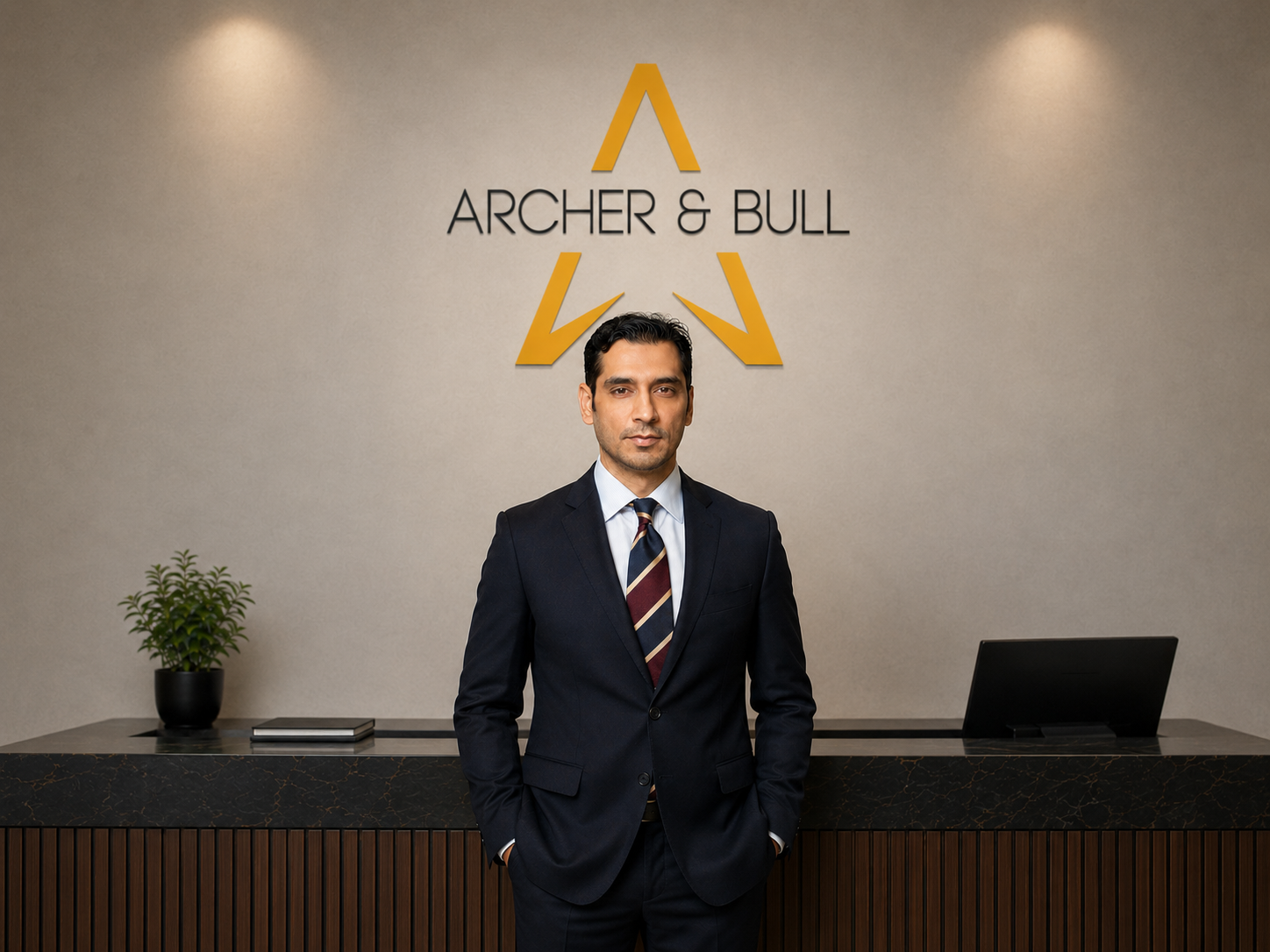
Rajat Mehra is the Founding Partner of Archer & Bull, an executive search and leadership advisory firm operating across the Middle East, India, Africa and South Asia. He leads the firm’s executive search practice, with a focus on CXO, board and senior leadership mandates. Archer & Bull’s work spans leadership advisory, cross-border executive hiring, expatriate and repatriation hiring and strategic boardroom appointments.
An engineer with an MBA from SPJIMR, Mehra began his career with Landmark Group and progressed to Head of Talent Acquisition before founding Archer & Bull in 2014. His leadership philosophy centres on structured thinking, human insight and long-term value creation.
About Archer & Bull
Archer & Bull is a leadership advisory and executive search firm with operations spanning the Middle East, India, Africa and South Asia. The firm works across CXO hiring, board appointments, cross-border leadership mandates and talent advisory, with a stated emphasis on a human-first, technology-enabled approach to executive search.